2021-2024, Postdoctoral Researcher at
Karlsruhe Institute of Technology
The role of coherent air streams in shaping the Gulf Stream’s impact
on the large-scale extratropical circulation (GulfImpact)
2021, Ph.D. in Earth Science, University of Gdansk
Thesis: Numerical modeling and observations of the atmospheric boundary layer over sea ice
Supervisor: Dr. hab. Agnieszka Herman, prof. UG.
2015, M.Sc. in Natural Sciences, University of Gdansk
Thesis: Numerical modeling of the influence of albedo, ice thickness, and concentration
on the Atmospheric Boundary Layer in the Gulf of Finland and the Gulf of Bothnia
Supervisor: Dr. hab. Agnieszka Herman, prof. UG.
2013, B.A. in Oceanography, University of Gdansk
I’m Dr. Marta Wenta, an atmospheric scientist working at the intersection of weather, climate, and ecosystems. I earned a Ph.D. in Earth Science from the University of Gdańsk (2021), focusing on the atmospheric boundary layer over sea ice, and then joined the Karlsruhe Institute of Technology as a postdoctoral researcher, investigating how Gulf Stream air–sea interactions and coherent air streams shape atmospheric blocking and Euro-Atlantic weather regimes. My work combines Lagrangian trajectory analysis, reanalysis data, and numerical modelling, with a long-standing interest in subseasonal-to-seasonal prediction.
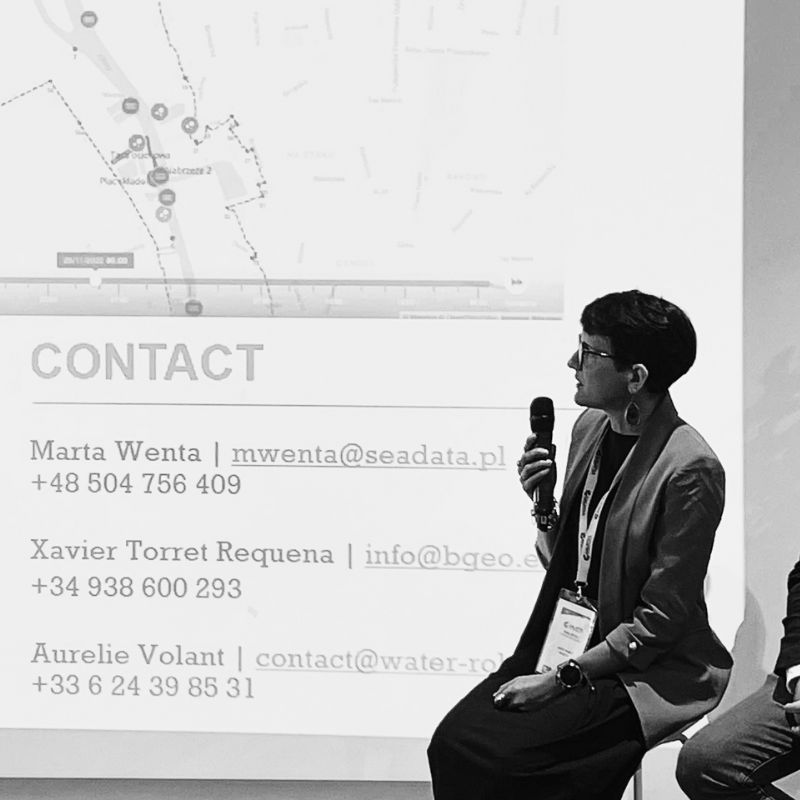
Alongside research, I’ve worked in industry and consulting. I co-founded SeaData, an environmental monitoring company based in Gdynia, Poland, where I served as product manager and consultant for the Port of Gdynia and the Port of Gdańsk and co-designed the YetiSense and CORAL monitoring systems. I’ve authored or co-authored several successful EU proposals under Horizon 2020 and startup acceleration programmes, and I remain involved in SeaData’s grant work today. I later worked as an energy meteorologist at Axpo, delivering weather briefings to traders and developing subseasonal forecasting tools, and as a Lead Specialist at IMGW-PIB, where I developed meteorological analyses and long-range forecasting products.
Today I’m based at the University of Freiburg’s Cluster of Excellence Future Forests, where I combine my own research with a coordinating role. As coordinator of the SES ModelLab, I connect modelling work across the cluster’s research groups, run hands-on sessions on reanalysis and model applications, and maintain a shared registry of models and data. In parallel I continue my meteorological research on large-scale atmospheric dynamics — weather regimes, blocking, and the moisture pathways behind European extremes — and on how these circulation patterns shape the conditions forests experience.
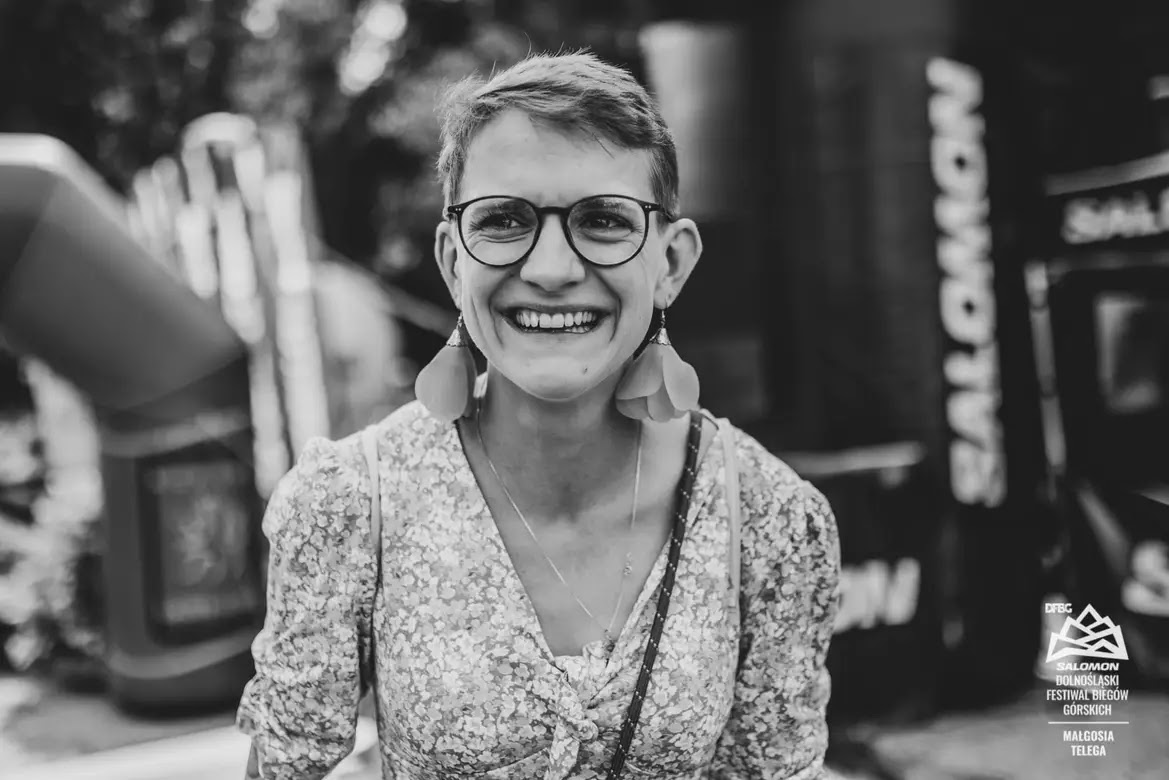
In my free time I’m a trail and ultra runner — Polish Vice Champion in mountain ultrarunning (2017) and a top-ten mountain ultrarunner in Poland.

Below are some highlights of my publications, conferences, and other scholarly work.
As a postdoctoral researcher at the Karlsruhe Institute of Technology (2021–2024), I worked on the GulfImpact project, investigating how coherent air streams communicate the Gulf Stream's influence to the large-scale extratropical circulation.
Using Lagrangian trajectory analysis of ERA5 reanalysis alongside ICON model experiments, I traced the diabatic processes linking North Atlantic sea surface temperature gradients to warm conveyor belt ascent, downstream ridge building, and European blocking. I also co-supervised Master's and Bachelor's theses on these topics.
Co-founder of SeaData Ltd., a company focusing on environmental monitoring services.
Responsibilities:
Project manager in EU-funded projects (CORAL)
Lead Product Manager / Data Scientist
Environmental monitoring consultant
Co-designer of YetiSense and CORAL air pollution monitoring systems, and creator of a risk assessment tool predicting the risk of coal dusting and high pollution levels caused by weather conditions. I am also the author or co-author of several EU research proposals under Horizon 2020 (successful submissions: Space3ac, ESABIC, and CORAL).
As an Energy Meteorologist at Axpo, I delivered daily weather briefings to traders, assessed weather-related risks for energy markets, and improved forecasting tools and methodologies. My role also included developing tools for enhanced subseasonal weather prediction and collaborating with risk optimization and origination teams to support their decision-making processes.
As a Lead Specialist at the Institute of Meteorology and Water Management – National Research Institute (IMGW-PIB), I developed subseasonal-to-seasonal (S2S) prediction tools and weather regime forecasts, together with advanced meteorological analyses supporting long-range forecasting.
During this time I was awarded a SONATA 21 grant from the Polish National Science Centre (NCN) for the project Lagrangian analysis of the influence of diabatic processes on Atlantic–European atmospheric blocking.
Cooperative Institute for Research in Environmental Sciences (CIRES), Boulder, Colorado (2020-2021). Under supervision of Prof. John J. Cassano, focusing on sUAS-based weather observations.
Renard Center for Marine Geology, Ghent University, Belgium (2012). Investigating deep-sea sediment dynamics and ecosystems in the Whittard Canyon (120 working hours).
• WRF (Weather Research & Forecasting)
• CESM (Community Earth System Model)
• Python, LAGRANTO, MATLAB
• Working with Big Data
• Linux/Ubuntu, TeX, MS Office
• Coordination of multi-partner EU-funded projects (Horizon 2020, CORAL)
• Designing and implementing environmental monitoring solutions
• Advising ports and organizations on risk assessment and sustainability
Avid trail runner, Polish Vice Champion in mountain ultrarunning (2017) and top ten mountain ultrarunner in Poland in 2024.
Co-Coordinator of youth programs and leader of a Polish youth group during an international exchange in Lithuania, Center of Youth Cooperation, Gdynia, Poland (1 Oct 2012 – 1 Jun 2014).
Ticketing Volunteer, UEFA EURO 2012 (1 Jun 2012 – 10 Jul 2012)
Scout Instructor and team leader in Kartuzy, Związek Harcerstwa Rzeczypospolitej (Scouting Association of the Republic of Poland), active: 2007–2012.